


Workplace Bullying & Toxic Cultures Are Under Scrutiny
Introduction
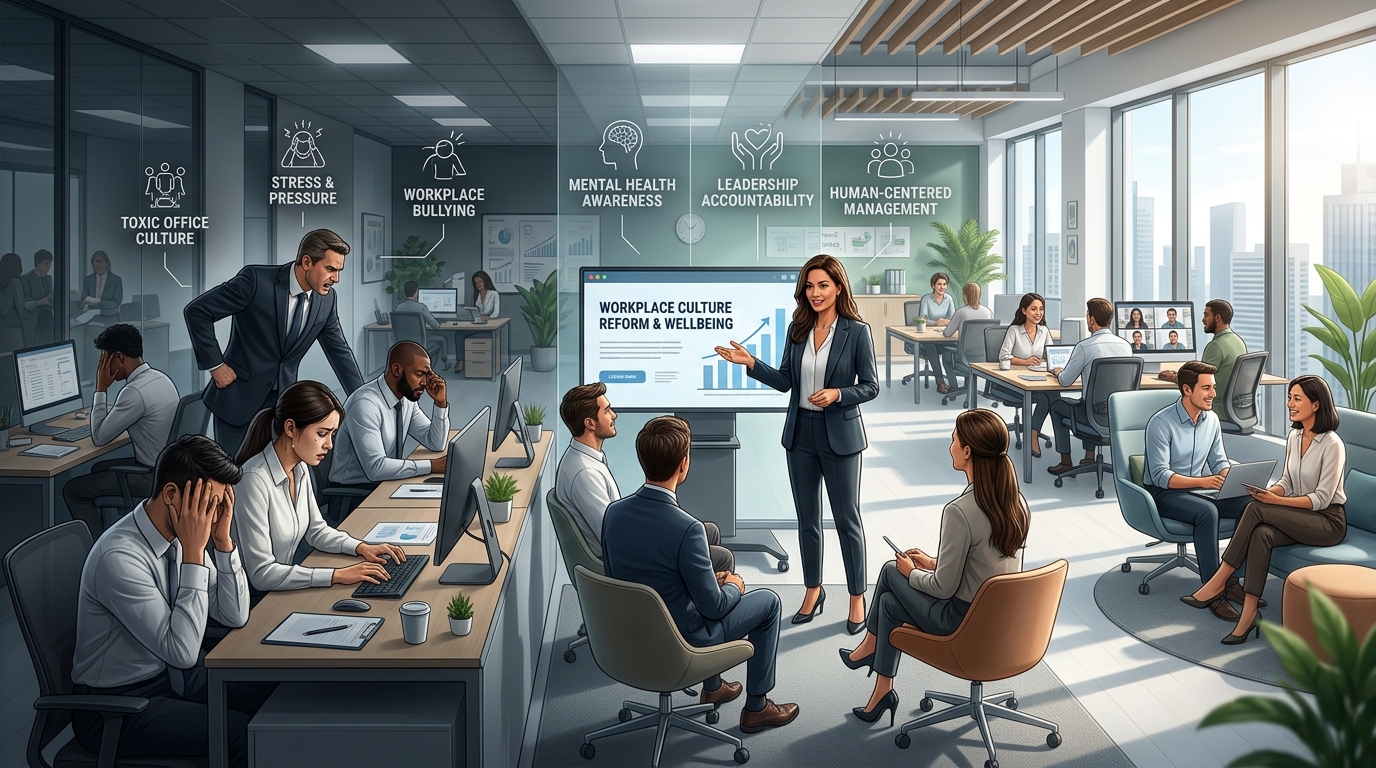
In 2026, workplace culture has become one of the most important business discussions across the world. Companies are no longer judged only by profits, market share, or growth numbers. Employees, customers, investors, and even governments are now paying close attention to how organizations treat their people internally.
One major issue receiving global attention is workplace bullying and toxic organizational culture. From startups to multinational corporations, stories of employee burnout, harassment, fear-based leadership, public humiliation, discrimination, and unhealthy work pressure are surfacing more frequently than ever before.
Businesses are realizing that toxic culture is not just an HR problem anymore it is a serious business risk that affects productivity, innovation, retention, employer branding, and long-term growth.
Today, organizations are being forced to rethink leadership behavior, employee wellbeing, communication systems, and performance management practices in order to build healthier workplaces.
What Is Workplace Bullying?
Workplace bullying refers to repeated harmful behavior directed toward employees that creates fear, stress, humiliation, or psychological harm.
It can happen in many forms, including:
Public criticism or humiliation
Constant micromanagement
Verbal abuse
Excluding employees from discussions
Spreading rumors
Threatening job security
Excessive workload pressure
Discrimination or favoritism
Manipulation by managers or coworkers
Passive-aggressive communication
Unlike normal workplace disagreements, bullying becomes a pattern that damages employee confidence, mental health, and professional performance over time.
Understanding Toxic Workplace Culture
A toxic workplace culture is an environment where unhealthy behaviors become normalized.
This usually happens when:
Leadership ignores employee concerns
Fear controls decision-making
Employees feel psychologically unsafe
Work-life balance is consistently ignored
Politics become more important than collaboration
Burnout is celebrated as dedication
Employees fear speaking honestly
Accountability is missing for leaders
In toxic cultures, employees often survive rather than grow.
Why Toxic Workplace Culture Is Receiving More Attention
1. Employees Are Speaking Out Publicly
Social media and professional platforms like LinkedIn have given employees a stronger voice. Workers are openly sharing experiences about toxic bosses, burnout, harassment, and unfair treatment.
This public visibility has increased pressure on companies to improve workplace environments.
A single viral employee experience can now damage a company’s reputation globally.
2. Mental Health Awareness Is Increasing
Employee mental health is now considered a major business concern.
Research shows that toxic workplaces contribute to:
Anxiety
Depression
Emotional exhaustion
Chronic stress
Low confidence
Reduced productivity
Modern employees are prioritizing mental wellbeing more than previous generations. Many workers are willing to leave high-paying jobs if the work environment becomes emotionally unhealthy.
3. Burnout Has Become a Global Workplace Crisis
The “always available” work culture created by remote work, smartphones, and digital communication has intensified burnout levels.
Employees often face:
Constant notifications
Long working hours
Unrealistic expectations
Pressure to stay online
Lack of recovery time
Organizations are now realizing that exhausted employees cannot perform sustainably.
4. Toxic Leadership Hurts Business Performance
Many businesses previously tolerated aggressive leadership styles if results were strong. However, companies are now learning that toxic leadership creates long-term damage.
Negative leadership can cause:
High employee turnover
Reduced innovation
Poor collaboration
Loss of trust
Recruitment difficulties
Weak team morale
A toxic manager may produce short-term output but destroy long-term organizational stability.
Common Signs of a Toxic Workplace
Fear-Based Management
Employees become afraid to ask questions, make mistakes, or share opinions.
This creates silence instead of innovation.
High Employee Turnover
When employees continuously leave an organization, it often signals deeper cultural problems.
Retention issues are usually symptoms of leadership or culture failures.
Lack of Transparency
Toxic organizations often hide information, avoid honest communication, and create confusion among teams.
Employees feel disconnected from leadership decisions.
Gossip & Internal Politics
When office politics dominate collaboration, trust begins to disappear.
Teams stop working together effectively.
Overworking Employees
Many toxic companies glorify burnout and overwork by treating exhaustion as commitment.
This creates unhealthy performance expectations.
The Real Cost of Toxic Workplace Culture
1. Financial Losses
Toxic environments increase:
Hiring costs
Absenteeism
Healthcare expenses
Legal risks
Productivity losses
Replacing skilled employees repeatedly becomes expensive.
2. Reduced Innovation
Employees in unhealthy environments avoid taking risks or sharing ideas.
Innovation declines because people focus more on survival than creativity.
3. Employer Brand Damage
Modern job seekers research company culture before applying.
Negative employee reviews on platforms like Glassdoor can significantly damage recruitment efforts.
4. Customer Experience Suffers
Unhappy employees often create poor customer experiences.
Internal culture eventually impacts external business performance.
Why Younger Generations Reject Toxic Cultures
Millennials and Gen Z employees are changing workplace expectations.
They prioritize:
Purpose-driven work
Mental health
Respectful leadership
Flexible work environments
Inclusion
Personal growth
Work-life balance
Unlike older workplace generations, younger employees are less willing to tolerate unhealthy management systems.
This shift is forcing organizations to evolve faster.
The Rise of Human-Centered Leadership
One of the biggest trends in 2026 is the growth of human-centered leadership.
Modern leaders are now expected to:
Listen actively
Show empathy
Support employee wellbeing
Encourage collaboration
Build trust
Create psychological safety
Develop people, not just processes
Companies are learning that strong culture directly impacts business success.
How Companies Are Fighting Toxic Culture
1. Anonymous Employee Feedback Systems
Organizations are introducing confidential feedback tools so employees can report concerns safely.
This increases transparency and accountability.
2. Leadership Training Programs
Many companies now train managers on:
Emotional intelligence
Communication
Conflict resolution
Inclusive leadership
Stress management
Technical skills alone are no longer enough for leadership roles.
3. Mental Health & Wellness Initiatives
Businesses are investing in:
Therapy support
Wellness programs
Flexible schedules
Mental health days
Burnout prevention strategies
Employee wellbeing is becoming part of performance management.
4. Stronger HR Accountability
HR departments are becoming more strategic and data-driven.
Organizations now monitor:
Employee engagement
Workplace complaints
Burnout indicators
Retention patterns
Leadership effectiveness
This helps identify toxic behaviors earlier.
The Role of AI in Workplace Culture Monitoring
AI-powered HR tools are also transforming workplace culture management.
Companies now use analytics to track:
Employee sentiment
Engagement trends
Burnout risks
Communication patterns
Productivity health
However, businesses must balance AI monitoring carefully with employee privacy and trust.
Building a Healthy Workplace Culture
Healthy workplace cultures are built intentionally.
Key elements include:
Clear Communication
Employees should understand goals, expectations, and company direction clearly.
Psychological Safety
Workers must feel safe sharing ideas without fear.
Fair Leadership
Managers should treat employees consistently and respectfully.
Employee Recognition
Appreciating employee contributions improves morale and retention.
Work-Life Balance
Sustainable performance requires proper recovery and flexibility.
Growth Opportunities
Employees stay engaged when they see personal and professional development opportunities.
The Future of Workplace Culture
The future workplace will likely become:
More employee-centered
More flexible
More transparent
More mental-health focused
More collaborative
More accountability-driven
Organizations that ignore culture problems may struggle with:
Talent shortages
Weak employer reputation
Lower productivity
Increased employee turnover
Meanwhile, businesses that build healthy cultures will gain competitive advantages in recruitment, innovation, and long-term growth.
Conclusion
Workplace bullying and toxic cultures are no longer hidden organizational problems. They are now major business issues affecting performance, reputation, employee wellbeing, and sustainability.
The companies that succeed in the future will not simply be those with the best products or highest revenues. They will be the organizations that create environments where employees feel respected, supported, motivated, and psychologically safe.
Culture is no longer just an internal HR topic.
It has become a core business strategy.
In 2026 and beyond, companies that fail to prioritize healthy workplace culture may lose both talent and trust two of the most valuable assets any business can have.
