


Subscription-Based Business Models Continue Expanding
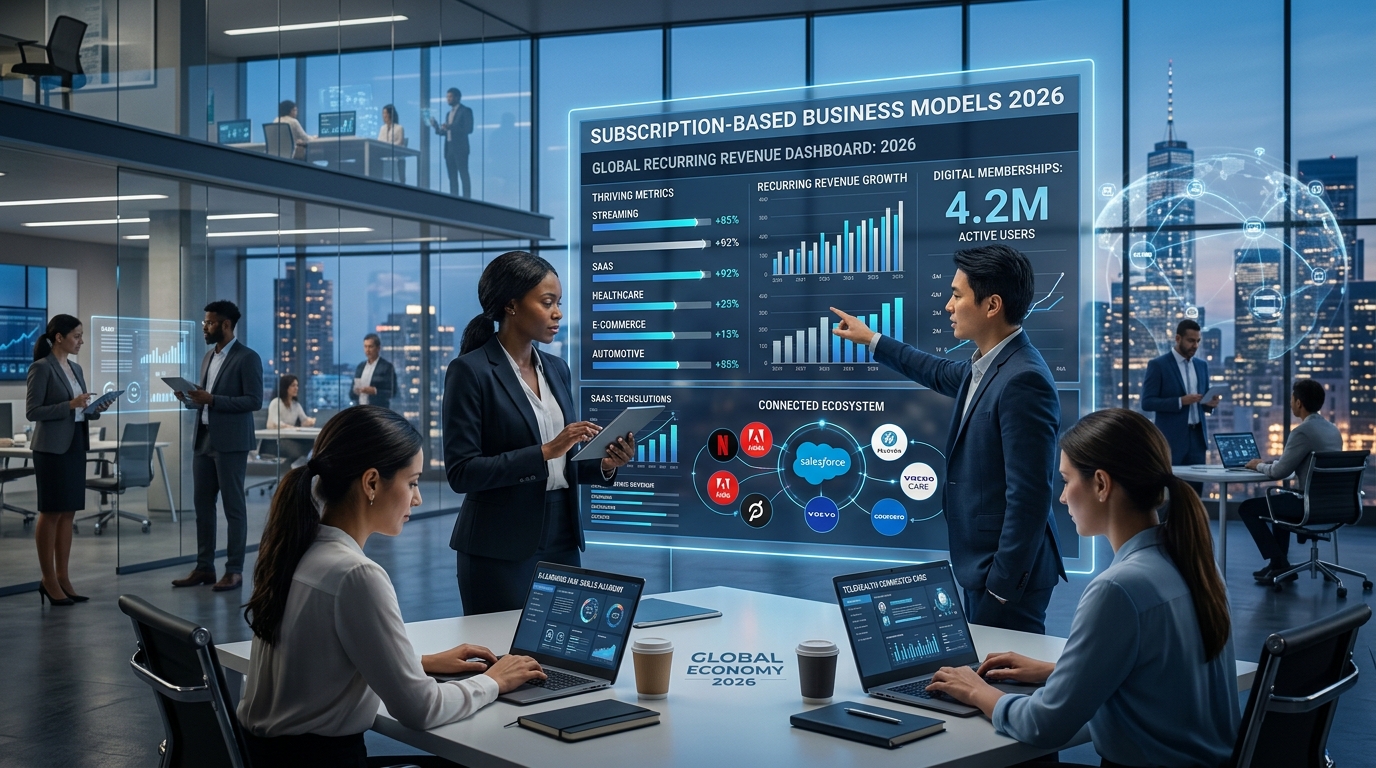
The global business landscape is undergoing one of the most important transformations of the modern era. Across industries, companies are shifting away from traditional one-time sales models and embracing subscription-based business systems that create recurring revenue, stronger customer relationships, and long-term financial stability.
What once seemed limited to magazines, cable television, and software licensing has evolved into a global economic movement now known as the subscription economy. In 2026, subscriptions influence how people consume entertainment, purchase products, access healthcare, use transportation, manage finances, learn new skills, and even interact with household appliances.
The rise of subscription-based business models reflects a larger shift in consumer expectations. Modern customers increasingly value convenience, flexibility, access, personalization, and seamless experiences over permanent ownership. Businesses that understand these changing behaviors are redesigning their entire operating models around recurring customer engagement rather than isolated transactions.
The expansion of subscription businesses is no longer limited to technology startups or digital companies. Global corporations, retail brands, manufacturers, automotive companies, healthcare providers, educational platforms, and industrial service providers are all investing heavily in subscription ecosystems.
As economic uncertainty continues to challenge businesses worldwide, recurring revenue models are becoming one of the most attractive strategies for sustainable growth and resilience.
Understanding the Subscription Economy
A subscription business model allows customers to pay recurring fees monthly, quarterly, or annually in exchange for ongoing access to products or services. Instead of generating revenue only when a customer makes a purchase, businesses continuously earn income throughout the customer relationship.
This model fundamentally changes how companies operate.
Traditional business models focus heavily on:
Product sales
Inventory turnover
Seasonal demand
Short-term transactions
Customer acquisition spikes
Subscription models focus on:
Customer retention
Long-term engagement
Recurring cash flow
Lifetime customer value
Predictable growth
This transition has massive implications for corporate strategy, operational planning, and market competition.
The subscription economy is now worth trillions globally and continues expanding rapidly across both developed and emerging markets.
Why Subscription Models Are Growing So Rapidly
Several major economic and technological forces are driving the rapid growth of subscription businesses worldwide.
Predictable and Stable Revenue
One of the biggest advantages of subscriptions is recurring income predictability. Traditional businesses often struggle with fluctuating demand, seasonal slowdowns, and inconsistent cash flow.
Subscription businesses can forecast revenue more accurately because they know how many customers are paying recurring fees.
This creates major strategic advantages:
Better budgeting
Improved hiring decisions
Stronger investment planning
Easier expansion strategies
Higher operational stability
Predictable revenue also increases investor confidence. Many investors prefer subscription-based companies because stable cash flow reduces business risk and improves valuation potential.
Rising Customer Lifetime Value
Traditional businesses often depend on constantly finding new customers to maintain growth. Subscription businesses focus more heavily on maximizing the value of existing customers over time.
A retained customer paying monthly fees for years becomes significantly more valuable than a customer making a single purchase.
This creates a powerful financial effect:
Marketing efficiency improves
Customer acquisition costs become easier to recover
Profitability increases over time
Revenue compounds continuously
Many modern businesses now prioritize retention metrics as much as revenue growth.
Digital Transformation and Automation
Cloud computing, mobile applications, digital payments, and automated billing systems have made subscriptions easier to manage than ever before.
Businesses can now:
Automate recurring payments
Track customer behavior
Deliver digital services instantly
Personalize user experiences
Scale globally with lower costs
Technology has dramatically reduced operational friction for subscription-based businesses.
Consumer Preference for Access Over Ownership
Modern consumers increasingly prioritize flexibility and convenience.
Many customers now prefer:
Streaming instead of buying DVDs
Leasing instead of owning vehicles
Monthly software access instead of permanent licenses
Membership services instead of one-time purchases
This behavioral shift is especially strong among younger generations who value experiences and convenience more than traditional ownership models.
The Industries Leading the Subscription Revolution
Software and Technology
Software-as-a-Service (SaaS) remains the foundation of the subscription economy.
In the past, businesses purchased software licenses upfront and installed systems locally. Today, most companies subscribe to cloud-based software platforms.
Examples include:
CRM systems
Accounting software
HR platforms
Project management tools
Cybersecurity services
Cloud storage
Communication platforms
SaaS subscriptions offer several advantages:
Lower upfront costs
Automatic updates
Remote accessibility
Scalability
Better security management
The SaaS sector continues to dominate global subscription revenue growth.
Entertainment and Streaming
Streaming services transformed global media consumption forever.
Consumers now subscribe to:
Video streaming platforms
Music services
Gaming memberships
Sports streaming packages
Digital news platforms
Podcast subscriptions
Competition in entertainment subscriptions has become extremely aggressive. Companies are investing billions in exclusive content and customer retention strategies.
The industry has also introduced:
Ad-supported subscriptions
Family plans
Premium experiences
Bundled entertainment packages
Streaming wars continue reshaping the global media industry.
E-Commerce and Retail
Retailers are rapidly adopting recurring revenue models.
Subscription commerce includes:
Monthly product boxes
Membership programs
Auto-refill subscriptions
Fashion rental platforms
Grocery delivery plans
Beauty subscriptions
Pet care subscriptions
Retail subscriptions improve customer loyalty and increase repeat purchasing behavior.
Large retailers now use memberships to:
Offer exclusive discounts
Provide faster shipping
Deliver loyalty rewards
Create premium ecosystems
These strategies help retailers compete more effectively in crowded markets.
Automotive Industry
The automotive industry is undergoing a major transformation through subscription services.
Consumers increasingly seek flexibility rather than long-term vehicle ownership commitments.
Automotive subscriptions may include:
Vehicle access
Maintenance
Insurance
Upgrades
Roadside support
Flexible switching options
This model appeals especially to urban consumers who prioritize convenience and adaptability.
Electric vehicle companies are also exploring subscription-based battery services and software-enabled vehicle upgrades.
Healthcare and Wellness
Healthcare subscriptions are expanding rapidly worldwide.
Examples include:
Telemedicine memberships
Mental health counseling subscriptions
Personalized wellness plans
Nutrition coaching
Preventive healthcare packages
Fitness platforms
Healthcare providers are moving toward continuous wellness management instead of reactive treatment models.
Consumers increasingly value ongoing healthcare access and convenience.
Education and Learning Platforms
Subscription learning platforms are changing education globally.
Students and professionals subscribe to:
Online courses
Skill development platforms
Language learning apps
Professional certification services
Corporate training systems
Continuous learning has become essential in modern economies, making education subscriptions highly scalable.
The Psychology Behind Subscription Success
Subscription businesses succeed partly because they align closely with human behavior and psychological habits.
Convenience Reduces Decision Fatigue
Consumers make countless purchasing decisions daily. Subscriptions simplify recurring needs by automating purchases and access.
Customers no longer need to repeatedly decide whether to:
Renew software
Buy entertainment
Reorder products
Schedule services
Automation creates convenience and strengthens long-term usage habits.
Habit Formation Creates Loyalty
Subscriptions often become integrated into customers’ daily routines.
For example:
Streaming entertainment
Fitness memberships
Meal delivery services
Productivity software
Once habits form, cancellation becomes psychologically more difficult.
Personalized Experiences Increase Engagement
Modern subscription platforms use customer data to personalize experiences.
Personalization may include:
Product recommendations
Curated content
Customized pricing
User-specific services
Behavioral targeting
Customers are more likely to remain loyal when services feel personalized.
The Financial Advantages of Subscription Models
Businesses increasingly favor subscriptions because recurring revenue improves financial performance in several ways.
Improved Cash Flow Stability
Predictable revenue helps companies:
Manage expenses more efficiently
Reduce operational uncertainty
Improve long-term planning
Secure financing more easily
Stable cash flow is especially valuable during economic downturns.
Higher Business Valuations
Investors often value subscription companies more highly because recurring revenue creates predictability and scalability.
Subscription businesses may receive:
Higher valuation multiples
Stronger investor confidence
Easier access to capital
Better acquisition opportunities
This has fueled massive growth in subscription-focused startups and public companies.
Stronger Data Collection
Subscription businesses continuously collect customer usage data.
This data helps companies:
Improve products
Predict customer behavior
Optimize pricing
Increase retention
Develop new services
Data-driven insights create powerful competitive advantages.
The Challenges Facing Subscription Businesses
Despite rapid growth, subscription models also face growing challenges.
Subscription Fatigue
Consumers now manage dozens of recurring payments across multiple services.
Many people feel overwhelmed by:
Rising monthly costs
Too many memberships
Complicated pricing structures
Unused subscriptions
As competition increases, businesses must work harder to justify recurring fees.
High Retention Pressure
Customer churn remains one of the biggest risks.
If businesses fail to provide ongoing value, customers cancel quickly.
Retention now depends heavily on:
Customer experience
Product quality
Innovation
Pricing fairness
Service reliability
Retention strategies are becoming central to subscription business survival.
Pricing Complexity
Choosing the right pricing structure is increasingly difficult.
Companies must balance:
Profitability
Customer affordability
Competitive positioning
Feature differentiation
Subscription pricing has become a strategic science involving constant testing and optimization.
Operational Complexity
Managing subscription ecosystems requires sophisticated infrastructure.
Businesses must handle:
Payment systems
Customer support
Usage analytics
Billing disputes
Data security
Compliance requirements
Operational excellence is critical for sustainable growth.
How Businesses Are Evolving Subscription Strategies
As markets mature, businesses are refining subscription approaches.
Hybrid Revenue Models
Many companies now combine:
Subscription revenue
Advertising
Premium upgrades
Transaction fees
One-time purchases
Diversification reduces dependency on a single income stream.
Flexible Subscription Structures
Modern consumers demand flexibility.
Businesses increasingly offer:
Pause subscriptions
Usage-based pricing
Tiered plans
Family packages
Freemium models
Flexibility helps reduce cancellations.
Community-Driven Ecosystems
Some businesses now build communities around subscriptions.
Examples include:
Member-only content
Exclusive forums
VIP access
Loyalty programs
Educational events
Community engagement strengthens retention and brand loyalty.
Global Expansion of Subscription Economies
Subscription adoption is expanding rapidly in emerging markets.
Countries like India, Brazil, Indonesia, and Mexico are seeing strong growth due to:
Smartphone adoption
Digital payment expansion
Internet accessibility
Younger populations
Growing middle classes
Global businesses increasingly view emerging markets as major opportunities for subscription expansion.
India, in particular, is becoming a major growth engine for subscription-based services across entertainment, fintech, education, and e-commerce sectors.
The Future of Subscription Business Models
The next phase of subscription growth will likely involve deeper integration with technology and daily life.
Future subscription trends may include:
AI-powered personalized services
Smart home ecosystems
Autonomous vehicle subscriptions
Healthcare monitoring memberships
Industrial equipment-as-a-service
Subscription-based manufacturing
Sustainable consumption models
As digital ecosystems become more advanced, recurring relationships between businesses and consumers will continue strengthening.
The companies that succeed will be those that combine:
Convenience
Transparency
Innovation
Trust
Personalization
Flexibility
Final Thoughts
Subscription-based business models are reshaping the modern global economy. Businesses across industries are moving away from isolated transactions and building long-term recurring relationships with customers.
The advantages are clear:
Predictable revenue
Improved customer retention
Higher lifetime value
Better scalability
Greater financial stability
However, success in the subscription economy requires more than simply charging recurring fees. Companies must continuously innovate, deliver meaningful value, maintain customer trust, and adapt to evolving consumer expectations.
In 2026, subscription businesses are no longer experimental strategies used by technology startups. They are becoming foundational operating models for companies worldwide.
The future of business is increasingly recurring, connected, and relationship-driven.
And the subscription economy is leading that transformation.
