


Retail Media Networks Are Exploding
The global advertising industry is experiencing a massive transformation, and one of the biggest drivers behind this change is the rapid rise of Retail Media Networks (RMNs). What once seemed like a secondary revenue opportunity for retailers has now evolved into one of the most powerful growth engines in modern business.
In 2026, Retail Media Networks are no longer viewed as experimental marketing channels. They are becoming the center of digital advertising strategies for global brands, retailers, and technology companies. The combination of first-party customer data, artificial intelligence, personalization, and measurable advertising performance has created a business model that is reshaping commerce itself.
The traditional advertising ecosystem is changing fast. Search engines and social media platforms once dominated digital advertising, but retailers are now entering the competition with something far more valuable:
direct customer purchase behavior.
Retailers know exactly what customers buy, how often they buy, when they buy, and what influences their decisions. This gives them an enormous competitive advantage in the advertising world.
As a result, billions of dollars in advertising budgets are shifting toward retail media platforms.
The explosion of Retail Media Networks is not just another trend.
It represents a structural shift in how businesses market, sell, and grow.
Understanding Retail Media Networks
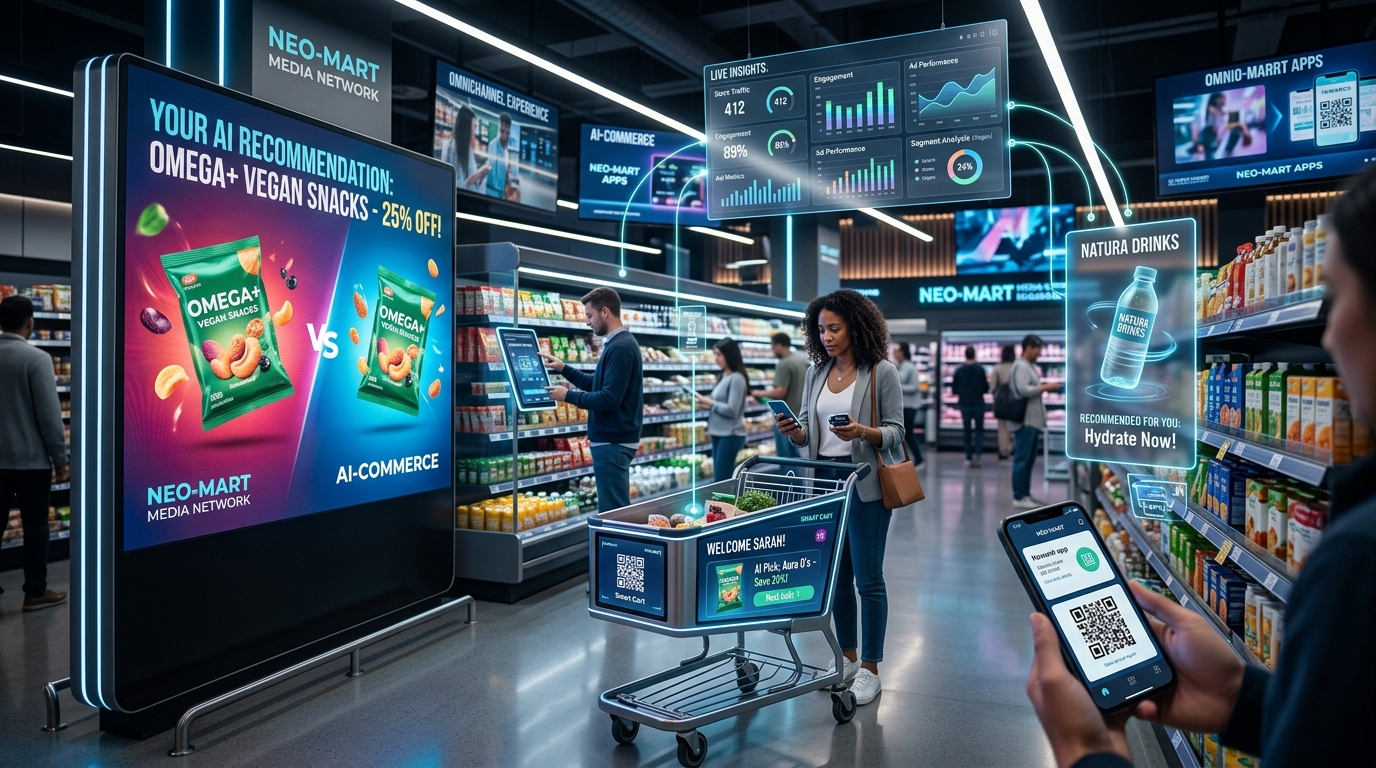
Retail Media Networks are advertising ecosystems created by retailers that allow brands to promote products across retailer-owned channels.
These channels include:
eCommerce websites
Mobile shopping apps
Product search results
Sponsored listings
Display advertisements
Loyalty platforms
Email marketing systems
Connected TV platforms
In-store digital screens
Smart shopping carts
Self-checkout displays
Delivery applications
Major retailers around the world are heavily investing in these systems.
Some of the most influential retail media platforms include:
Amazon Ads
Walmart Connect
Target Roundel
Kroger Precision Marketing
Instacart Ads
Tesco Media
Carrefour Links
Walgreens Advertising Group
These platforms allow advertisers to reach consumers at the exact moment they are making purchasing decisions.
Unlike traditional advertising, retail media connects advertisements directly to real shopping behavior and measurable sales outcomes.
That is why businesses are moving aggressively into this space.
The Global Retail Media Boom
Retail media has become one of the fastest-growing sectors in advertising history.
Industry analysts predict that global retail media spending will continue growing at double-digit rates over the next several years. Some experts even believe retail media could eventually rival or surpass traditional television advertising in total revenue generation.
The reason is simple:
Retail media delivers measurable business results.
Brands today are under intense pressure to justify marketing spending. Executives no longer want vague metrics like impressions or reach alone. They want:
measurable conversions
customer acquisition efficiency
revenue attribution
profitability insights
customer lifetime value tracking
Retail Media Networks provide exactly that.
This is why advertisers are rapidly shifting budgets away from traditional media channels toward retail ecosystems.
Why Retail Media Is Growing Faster Than Traditional Advertising
1. The Power of First-Party Data
One of the biggest reasons behind the growth of retail media is the collapse of third-party cookie tracking.
Privacy regulations and browser restrictions are making traditional digital targeting less effective. Companies can no longer rely on external tracking systems as they once did.
Retailers, however, own first-party customer relationships.
They collect massive amounts of valuable information including:
purchase history
shopping frequency
preferred brands
pricing sensitivity
seasonal buying patterns
geographic behavior
loyalty program activity
product preferences
This data is incredibly valuable because it reflects actual consumer purchasing behavior rather than estimated interests.
Advertisers can now target customers with much greater precision.
For example:
A grocery retailer can identify customers likely to switch brands
A beauty retailer can target repeat skincare buyers
A fashion retailer can predict seasonal purchasing behavior
A consumer electronics retailer can identify upgrade cycles
This level of targeting significantly improves advertising efficiency.
2. AI Is Accelerating Retail Media Growth
Artificial Intelligence is transforming Retail Media Networks into intelligent commerce systems.
Modern AI-powered retail media platforms can:
optimize ad placements in real time
personalize recommendations instantly
predict purchase probability
automate bidding strategies
analyze customer intent
improve conversion rates
forecast demand
reduce wasted ad spending
AI systems continuously learn from customer interactions and purchasing behavior.
This creates highly personalized shopping experiences where every customer sees different:
product recommendations
promotions
advertisements
pricing offers
search results
Retail media is becoming increasingly automated and predictive.
In many cases, AI systems now make advertising decisions faster and more accurately than human marketing teams.
Retailers Are Becoming Media Companies
One of the most important business transformations happening today is that retailers are evolving into advertising and media businesses.
Historically, retailers generated revenue primarily through product sales.
Now, advertising has become one of the most profitable segments of retail operations.
Why?
Because advertising margins are significantly higher than traditional retail margins.
Selling physical products involves:
manufacturing costs
inventory management
logistics expenses
warehousing
returns
operational complexity
Advertising, however, is a high-margin digital revenue stream.
Some retailers are now generating billions in advertising revenue annually, creating entirely new profit engines.
This shift is fundamentally changing how retailers operate and compete.
Retailers are no longer simply stores.
They are now:
data companies
advertising platforms
technology ecosystems
media networks
This transformation is reshaping the future of commerce.
Sponsored Search Is Dominating Retail Media
One of the fastest-growing areas inside retail media is sponsored product search.
When customers search for products on retailer websites, brands can pay for premium placement in search results.
These ads perform extremely well because customers already have strong purchase intent.
For example:
A customer searching for “protein powder” is likely ready to buy
A shopper browsing “wireless headphones” is actively considering products
A grocery customer searching for “coffee beans” already intends to purchase
Retail search advertising combines:
intent + visibility + convenience
This creates exceptionally high conversion potential.
Sponsored search is now becoming one of the most valuable digital advertising categories globally.
The Rise of Omnichannel Retail Media
Retail media is expanding beyond websites and apps into fully integrated omnichannel ecosystems.
Retailers are now connecting advertising experiences across:
online shopping
mobile devices
physical stores
smart shelves
digital signage
streaming television
social commerce
loyalty systems
delivery services
This creates seamless customer journeys.
For example:
A customer sees a product ad on a retailer app
They receive personalized email recommendations
They visit the physical store
Smart displays highlight the same product
Checkout systems deliver targeted promotions
Post-purchase ads encourage repeat buying
Every interaction is connected through customer data systems.
This level of integration creates powerful advertising ecosystems that traditional media channels struggle to replicate.
Retail Media and Connected TV (CTV)
Connected TV is becoming a major growth opportunity for Retail Media Networks.
Retailers are now using customer shopping data to power streaming television advertising.
This allows brands to combine:
household purchase behavior
streaming preferences
demographic insights
shopping patterns
to create highly targeted TV campaigns.
For advertisers, this is extremely valuable because it combines the emotional impact of television with the precision of digital targeting.
Retailers are increasingly partnering with streaming platforms to expand their advertising reach beyond shopping environments.
This is creating a new category known as:
commerce-driven television advertising.
How Retail Media Improves Customer Experience
When implemented correctly, retail media can actually improve customer experiences rather than disrupt them.
AI-powered personalization helps customers:
discover relevant products
find better deals
reduce search time
receive useful recommendations
explore new brands
Customers increasingly expect personalized shopping experiences.
Retail media systems help retailers deliver:
tailored offers
contextual promotions
customized search experiences
intelligent recommendations
This creates more engaging and efficient shopping journeys.
However, balance is critical.
Too many ads or poor-quality targeting can create customer frustration.
The best retail media systems focus on relevance rather than ad volume.
Challenges Facing Retail Media Networks
Despite massive growth, retail media still faces several important challenges.
Fragmentation
Each retailer has different:
advertising systems
reporting tools
data structures
campaign formats
measurement methods
This creates operational complexity for advertisers managing multiple retail platforms.
The industry still lacks standardization.
Data Privacy Concerns
As customer data becomes increasingly valuable, privacy concerns are growing.
Retailers must carefully balance:
personalization
advertising efficiency
customer trust
data security
regulatory compliance
Consumers are becoming more aware of how their data is used.
Transparency will become increasingly important.
Measurement Complexity
Attribution across multiple channels remains difficult.
Customers may interact with:
search ads
display ads
social media
influencer content
email campaigns
in-store promotions
before making purchases.
Retailers are investing heavily in advanced measurement and attribution technologies to solve this challenge.
The Future of Retail Media
The next phase of retail media growth will likely involve even deeper AI integration.
Future developments may include:
AI shopping assistants
voice commerce
predictive purchasing
autonomous product recommendations
virtual shopping environments
augmented reality advertising
personalized storefronts
automated marketing agents
AI systems may eventually manage entire advertising ecosystems automatically.
Consumers could receive fully personalized digital shopping experiences tailored uniquely to their behaviors, preferences, and goals.
Retail media may ultimately become the operating system for digital commerce.
Why Businesses Must Adapt Quickly
Brands that fail to invest in retail media risk falling behind competitors.
Modern consumers are increasingly shopping within retailer ecosystems where purchasing decisions happen rapidly.
Businesses must now develop capabilities in:
retail advertising
customer data analytics
AI-driven personalization
omnichannel marketing
commerce media strategy
The companies that adapt fastest will gain major competitive advantages.
Retail media is no longer optional for large brands.
It is becoming essential infrastructure for modern growth systems.
Final Thoughts
Retail Media Networks are transforming the global advertising industry faster than most businesses expected.
What makes RMNs so powerful is their ability to combine:
advertising
customer data
AI
commerce
personalization
revenue optimization
into one connected ecosystem.
Retailers now sit at the center of customer purchasing behavior, giving them enormous influence over product discovery and buying decisions.
As AI capabilities continue evolving and first-party data becomes increasingly valuable, retail media will likely become one of the dominant business models of the digital economy.
The future of advertising is moving closer to the point of purchase.
The future of commerce is becoming data-driven.
And Retail Media Networks are leading that transformation.
The companies that understand this shift early will be the ones that dominate the next generation of global business growth.
