


Industry-Specific AI Applications Are Expanding: The Next Era of Business Transformation
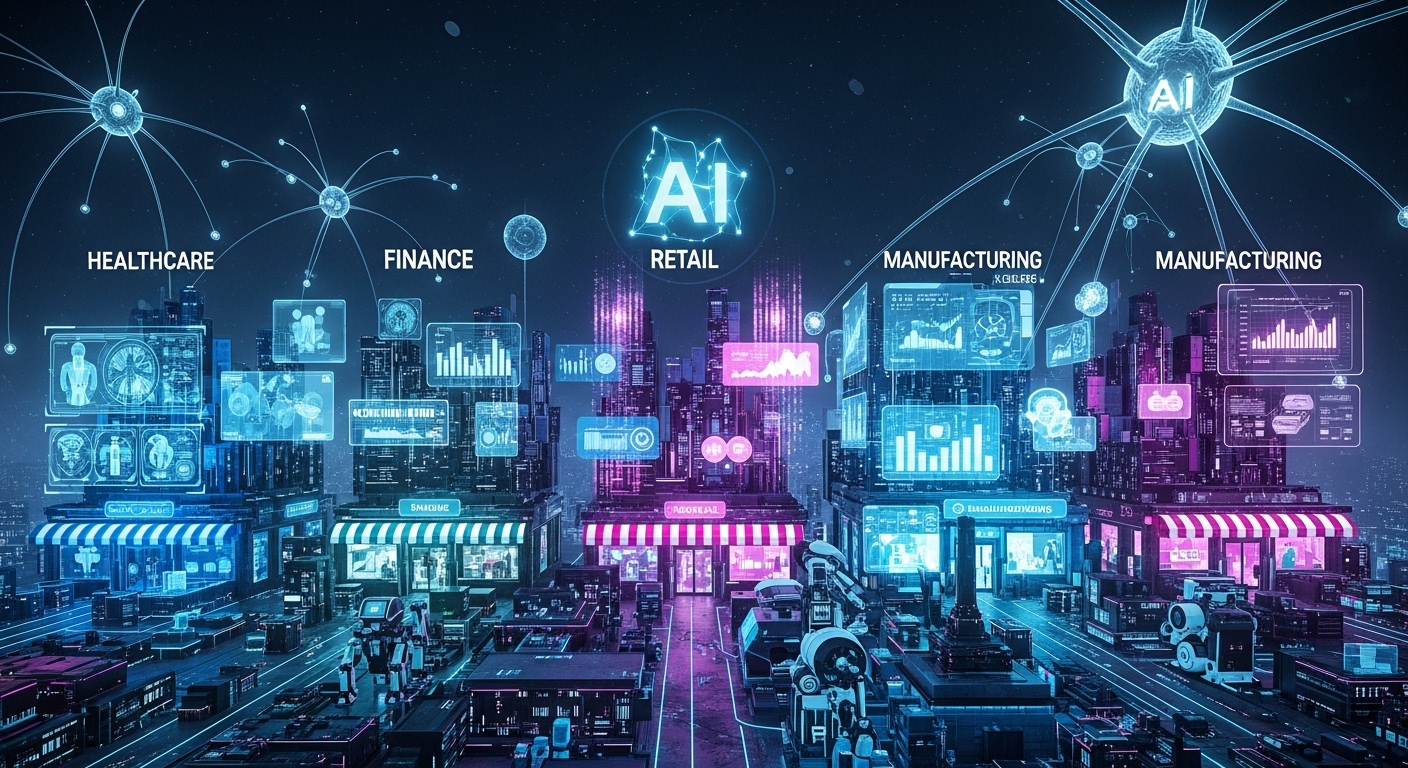
Artificial Intelligence has entered a new phase one where generic solutions are no longer enough. In 2026, businesses across the globe are rapidly adopting industry-specific AI applications designed to solve highly targeted problems with precision and efficiency. This shift is not just a trend; it represents a fundamental transformation in how organizations approach innovation, competition, and growth.
Earlier, companies experimented with broad AI tools such as chatbots or automation platforms. While these solutions delivered initial value, they often lacked the contextual understanding required for complex, real-world scenarios. Today, businesses are moving toward custom-built AI systems trained on industry data, enabling them to generate deeper insights, automate specialized tasks, and create meaningful outcomes.
Organizations leveraging technologies from leaders like OpenAI are now building tailored AI ecosystems that align closely with their operational goals, customer expectations, and regulatory frameworks.
The Shift from Generic AI to Industry Intelligence
The evolution from general AI to industry-specific applications is driven by several key factors. Businesses are no longer satisfied with surface-level automation they want intelligent systems that understand the nuances of their domain.
Key Drivers Behind This Shift:
Need for precision: Industry-specific AI reduces errors and improves decision accuracy
Data advantage: Organizations now possess vast amounts of sector-specific data
Competitive pressure: Early adopters are gaining measurable advantages
Regulatory demands: Industries require compliant and explainable AI systems
ROI focus: Businesses want AI investments to deliver tangible results
This transformation is helping companies move from AI experimentation to AI maturity, where systems are deeply embedded into everyday workflows.
AI in Healthcare: Revolutionizing Patient Care and Research
Healthcare has emerged as one of the most impactful domains for specialized AI applications. With access to massive datasets such as medical histories, imaging scans, and genomic data, AI systems are enabling breakthroughs that were once unimaginable.
Key Applications:
Early diagnosis: AI can detect diseases like cancer at earlier stages using imaging analysis
Personalized treatment: Machine learning models recommend treatments based on patient-specific data
Drug discovery: AI accelerates research by identifying potential compounds faster
Operational efficiency: Hospitals use AI to optimize scheduling, staffing, and resource allocation
Deeper Impact:
AI is not replacing doctors it is enhancing their capabilities. Physicians can now make data-driven decisions with greater confidence, reducing errors and improving patient outcomes. Additionally, predictive analytics is helping healthcare providers shift from reactive care to preventive healthcare models.AI in Finance: Intelligence, Security, and Speed
The financial industry has always relied on data, making it a natural fit for advanced AI applications. Today, AI systems are deeply integrated into financial operations, providing real-time insights and enhanced security.
Key Applications:
Fraud detection: AI identifies suspicious transactions instantly
Risk management: Predictive models assess creditworthiness and market risks
Algorithmic trading: AI executes trades based on market patterns and signals
Customer experience: Virtual assistants handle queries and financial advice
Strategic Value:
AI allows financial institutions to process vast amounts of data at speeds impossible for humans. This results in faster decision-making, reduced risks, and improved customer trust. Moreover, compliance-driven AI ensures that organizations adhere to strict financial regulations.
AI in Retail: Redefining Customer Engagement
Retail is undergoing a digital revolution powered by AI. Businesses are now focused on delivering hyper-personalized experiences that drive customer loyalty and increase revenue.
Key Applications:
Personalized recommendations: AI suggests products based on browsing and purchase history
Demand forecasting: Predicts what customers will buy and when
Dynamic pricing: Adjusts prices based on demand, competition, and trends
Customer insights: Analyzes sentiment, preferences, and behavior
Business Impact:
Retailers can now anticipate customer needs with remarkable accuracy. This leads to higher conversion rates, better inventory management, and improved customer satisfaction. AI also enables seamless omnichannel experiences, bridging online and offline shopping.
AI in Manufacturing: Smart Factories and Automation
Manufacturing is being transformed by AI-driven automation and smart technologies. The concept of the “smart factory” is becoming a reality, where machines, systems, and processes are interconnected and intelligent.
Key Applications:
Predictive maintenance: Prevents machine failures before they occur
Quality control: AI-powered vision systems detect defects in real time
Process optimization: Improves production efficiency
Supply chain coordination: Enhances logistics and material flow
Long-Term Benefits:
AI reduces downtime, minimizes waste, and boosts productivity. Manufacturers are achieving higher efficiency with lower operational costs, making them more competitive in global markets.
AI in Education: Personalized and Scalable Learning
Education is evolving from a standardized system to a personalized learning experience, thanks to AI.
Key Applications:
Adaptive learning platforms: Tailor content based on student performance
AI tutors: Provide instant support and explanations
Automated grading: Saves time for educators
Performance analytics: Identifies strengths and weaknesses
Transformational Impact:
AI empowers both students and teachers. Learners receive customized support, while educators gain insights into student progress. This leads to better learning outcomes and more efficient teaching methods.
AI in Logistics and Supply Chain: Efficiency at Scale
Supply chains are becoming more complex, and AI is helping businesses manage this complexity with precision.
Key Applications:
Route optimization: Determines the fastest and most efficient delivery paths
Warehouse automation: Robots handle sorting, packing, and inventory
Demand prediction: Anticipates supply needs
Real-time tracking: Provides visibility across the supply chain
Business Outcomes:
AI improves delivery speed, reduces costs, and enhances reliability. Companies can respond quickly to disruptions, ensuring smooth and resilient operations.
Emerging Sectors Adopting Industry-Specific AI
Beyond traditional industries, AI is expanding into new domains:
Agriculture:
Precision farming using AI-powered sensors
Crop health monitoring and yield prediction
Automated irrigation systems
Real Estate:
Property valuation using AI models
Smart building management systems
Market trend analysis
Energy:
Smart grids and energy optimization
Predictive maintenance for infrastructure
Renewable energy forecasting
These sectors highlight how AI is becoming universally applicable yet deeply specialized.
Challenges in Implementing Industry-Specific AI
Despite its potential, adopting specialized AI comes with challenges:
High implementation costs for custom solutions
Data privacy concerns, especially in sensitive industries
Integration issues with legacy systems
Skill gaps in AI expertise
Ethical considerations around bias and transparency
Businesses must address these challenges strategically to fully unlock AI’s benefits.
The Future: Hyper-Specialized and Collaborative AI
The future of AI lies in even deeper specialization and collaboration.
What to Expect:
AI models trained exclusively for niche industries
Increased partnerships between tech providers and domain experts
Democratization of AI tools for smaller businesses
Stronger governance and ethical frameworks
Companies like Google and Microsoft are already investing heavily in industry-specific AI ecosystems, accelerating this transformation.
Conclusion: Specialization Is the Key to AI Success
The expansion of industry-specific AI applications marks a new chapter in business innovation. Organizations that embrace tailored AI solutions are not only improving efficiency but also redefining how value is created in their industries.
The future is clear: AI will not just be intelligent it will be specialized, contextual, and deeply integrated into every sector.
Businesses that act now will position themselves as leaders in this new AI-driven world, while those that delay risk falling behind in an increasingly competitive landscape.
