


CEOs Are Prioritizing Resilience Over Growth
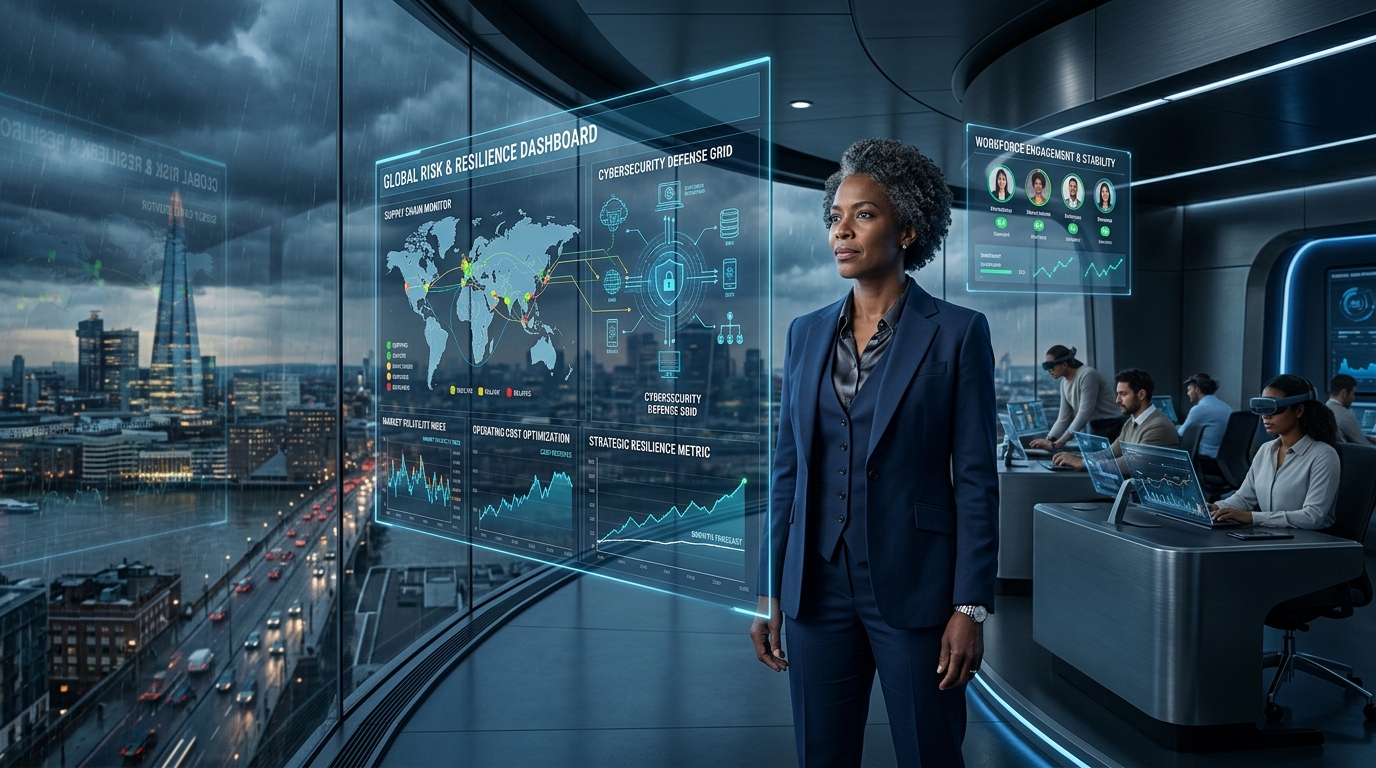
The global business environment in 2026 is unlike anything companies experienced in previous decades. Economic uncertainty, technological disruption, geopolitical instability, climate-related risks, workforce transformation, and artificial intelligence are reshaping industries faster than traditional leadership models can adapt.
For years, the dominant business philosophy was simple: grow faster than competitors. Investors rewarded companies that expanded aggressively, scaled rapidly, hired quickly, and captured market share at any cost. Growth became the primary metric of success.
But the business world has changed.
Today, many CEOs are shifting away from the “growth at all costs” mindset and embracing a new leadership priority: resilience.
Modern executives are realizing that rapid growth alone does not guarantee survival. In fact, many businesses that expanded too quickly without strong operational foundations became vulnerable when disruption arrived. Economic shocks, supply chain breakdowns, cybersecurity attacks, inflation, labor shortages, and AI-driven transformation exposed weaknesses across industries worldwide.
As a result, resilience is becoming the defining leadership strategy of 2026.
Companies now want to become:
More adaptable
More financially stable
More operationally flexible
More technologically prepared
More resistant to disruption
More sustainable over the long term
The focus is no longer only about becoming bigger.
It is about becoming stronger.
The End of the “Growth at All Costs” Era
For over a decade, businesses operated in an environment where cheap capital, rapid globalization, and digital expansion encouraged aggressive scaling. Startups were rewarded for rapid user growth even when profits were limited. Large corporations prioritized expansion into new markets, acquisitions, and constant acceleration.
The pressure to grow became extreme.
Executives were expected to:
Increase revenue every quarter
Expand globally at high speed
Hire rapidly
Outpace competitors aggressively
Innovate continuously
Deliver short-term shareholder returns
However, multiple global crises forced companies to rethink this model.
The COVID-era disruptions revealed how fragile global systems had become. Supply chains collapsed. Labor markets shifted dramatically. Inflation surged. Energy prices fluctuated. Consumer behavior changed rapidly. Cyberattacks increased. Geopolitical tensions intensified. At the same time, artificial intelligence began transforming industries faster than expected.
These disruptions created one clear lesson:
Businesses built only for speed often struggle during uncertainty.
Companies that survived successfully were usually the ones with:
Strong operational discipline
Healthy cash reserves
Diversified supply chains
Flexible workforce structures
Digital infrastructure
Effective crisis management systems
This realization changed executive thinking worldwide.
Today, CEOs are prioritizing resilience because resilience protects long-term survival.
Understanding Business Resilience in 2026
Business resilience is no longer limited to emergency planning or disaster recovery. In modern leadership, resilience has evolved into a complete strategic framework.
A resilient company is able to:
Operate effectively during disruption
Recover quickly from crises
Adapt rapidly to market changes
Protect customer trust
Maintain operational continuity
Respond intelligently to uncertainty
Balance innovation with stability
Resilience today combines:
Financial resilience
Operational resilience
Technological resilience
Workforce resilience
Supply chain resilience
Cyber resilience
Leadership resilience
In many ways, resilience has become the new foundation of business transformation.
Why CEOs Are Focusing More on Stability
1. Economic Volatility Is Creating Constant Pressure
Global economic conditions remain highly unpredictable.
Businesses are facing:
Inflation fluctuations
Interest rate uncertainty
Slower economic growth
Currency instability
Rising operational costs
Reduced consumer spending power
In previous years, companies often relied on aggressive expansion strategies to offset financial pressure. But many executives now recognize that uncontrolled growth during unstable periods can increase risk significantly.
As a result, CEOs are becoming more cautious.
Organizations are prioritizing:
Sustainable profitability
Operational efficiency
Controlled spending
Cash flow management
Long-term financial planning
Instead of pursuing reckless expansion, businesses are asking:
Can growth remain sustainable?
Can the company survive another global disruption?
Is the organization financially prepared for uncertainty?
This mindset represents a major transformation in executive leadership.
Artificial Intelligence Is Reshaping Leadership Decisions
AI is one of the biggest reasons resilience has become essential.
Artificial intelligence is transforming:
Operations
Customer service
finance
Marketing
Manufacturing
HR
Logistics
Strategic decision-making
While AI creates enormous opportunities, it also creates uncertainty.
CEOs are now dealing with difficult strategic questions:
Which roles will become automated?
How quickly should AI be implemented?
How can businesses avoid overdependence on AI systems?
What risks exist around AI ethics and compliance?
How should employees be reskilled?
How can companies remain competitive without destabilizing operations?
Many organizations rushed into digital transformation during previous years without clear governance structures. CEOs now understand that uncontrolled technological change can create operational instability.
This is why many companies are now focusing on:
Responsible AI adoption
AI governance systems
Human-AI collaboration
AI security frameworks
Ethical AI policies
Workforce reskilling programs
The goal is no longer simply “adopt AI faster.”
The goal is to build AI-driven resilience.
Supply Chain Resilience Has Become a Global Priority
One of the most important lessons businesses learned in recent years is that supply chain efficiency alone is not enough.
For decades, companies optimized supply chains for:
Lower costs
Faster production
Global sourcing efficiency
Lean inventory systems
However, recent disruptions exposed major vulnerabilities.
Global events caused:
Shipping delays
Manufacturing shutdowns
Raw material shortages
Semiconductor crises
Rising transportation costs
Supplier instability
Many companies became overly dependent on single regions or suppliers.
As a result, CEOs are redesigning supply chains to prioritize resilience over pure efficiency.
Businesses are now investing in:
Multi-country sourcing
Regional manufacturing
Nearshoring strategies
Backup suppliers
AI-powered logistics forecasting
Real-time inventory visibility
Smart supply chain monitoring
The future supply chain is no longer just efficient.
It must also be adaptable.
Cybersecurity Is Now a Business Survival Issue
As businesses become increasingly digital, cyber threats continue growing rapidly.
Modern cyberattacks can:
Shut down entire operations
Disrupt global systems
Leak customer data
Damage reputation
Create legal consequences
Cause massive financial losses
In many industries, cybersecurity is now considered a core leadership issue rather than simply an IT responsibility.
CEOs are heavily investing in:
Cloud security
AI-powered threat detection
Data privacy systems
Cybersecurity training
Business continuity planning
Disaster recovery systems
Cyber resilience is becoming critical because digital businesses cannot survive prolonged system failures.
The modern CEO must think about digital risk in the same way previous generations thought about financial risk.
Workforce Resilience Is Becoming Essential
The workforce itself has changed dramatically.
Employees today face:
Burnout
Digital fatigue
Constant change
AI-related job anxiety
Economic pressure
Remote work challenges
At the same time, companies are struggling with:
Talent shortages
Employee retention
Leadership gaps
Skills transformation
Businesses are increasingly realizing that workforce wellbeing directly affects organizational stability.
A burned-out workforce creates:
Lower productivity
Reduced innovation
Higher turnover
Poor customer experiences
Cultural instability
This is why resilient organizations are investing in:
Employee wellbeing
Leadership development
Flexible work environments
Continuous learning programs
Mental health support
AI upskilling initiatives
The future workforce must be adaptable, not just productive.
CEOs Are Redefining Leadership Models
Leadership itself is evolving.
In the past, CEOs were often celebrated for:
Aggressive expansion
Fast decision-making
Market domination
Risk-taking behavior
Today’s environment requires a different leadership approach.
Modern CEOs must balance:
Innovation and stability
Automation and human talent
Growth and profitability
Speed and resilience
Efficiency and flexibility
As a result, leadership styles are becoming:
More strategic
More data-driven
More adaptive
More transparent
More risk-aware
The modern CEO is no longer simply a growth architect.
They are becoming a resilience strategist.
Investors Are Also Rewarding Resilience
Investor expectations are changing rapidly.
During previous years, investors often prioritized:
Revenue growth
User acquisition
Expansion speed
Market share
Today, investors are becoming more cautious.
They increasingly favor companies with:
Predictable cash flow
Sustainable profitability
Strong operational systems
Risk management frameworks
Healthy margins
Financial discipline
Many businesses that focused heavily on hype-driven expansion struggled when market conditions changed.
This has pushed companies toward more balanced growth strategies.
The market is beginning to reward durability over unsustainable acceleration.
Resilience Is Becoming a Competitive Advantage
One of the most important shifts in 2026 is that resilience is no longer viewed as defensive.
It is becoming offensive.
Companies that adapt quickly during disruption gain major advantages over competitors.
Resilient businesses can:
Recover faster
Maintain customer trust
Protect operations
Retain employees
Continue innovation during crises
In contrast, fragile organizations lose momentum quickly when disruption occurs.
This is why resilience is becoming a key competitive differentiator across industries.
Industry-by-Industry Transformation
Manufacturing
Manufacturers are investing in:
Smart factories
Robotics
Predictive maintenance
AI-powered production monitoring
Supply chain diversification
The focus is creating factories capable of adapting rapidly to changing conditions.
Technology
Technology companies are shifting toward:
Sustainable scaling
AI governance
Controlled hiring
Infrastructure resilience
Cybersecurity investment
Tech firms are realizing that long-term sustainability matters more than rapid expansion alone.
Retail
Retail businesses are focusing on:
Omnichannel flexibility
Inventory optimization
Consumer behavior forecasting
AI-powered personalization
Supply chain agility
Retailers must remain adaptable as customer expectations change constantly.
Financial Services
Banks and financial firms are investing heavily in:
Fraud detection
Compliance automation
AI-driven analytics
Risk management
Cybersecurity resilience
Financial stability is becoming inseparable from technological resilience.
Healthcare
Healthcare organizations are prioritizing:
Digital infrastructure
AI-assisted diagnostics
Workforce resilience
Data security
Operational continuity
The healthcare sector now understands the importance of crisis preparedness more than ever before.
The Rise of “Resilient Transformation”
One of the biggest business concepts emerging in 2026 is resilient transformation.
This means businesses are still innovating and modernizing but with greater balance and long-term planning.
Instead of asking:
“How fast can we scale?”
Companies are now asking:
How sustainable is the transformation?
Can systems adapt under pressure?
Are employees prepared for change?
Can operations continue during disruption?
Is technology creating stability or dependency?
Transformation is no longer only about speed.
It is about endurance, adaptability, and long-term survival.
Key Lessons for Modern Business Leaders
1. Stability Is Strategic
Strong operational foundations create long-term competitive advantages.
2. Adaptability Matters More Than Perfection
The ability to respond quickly is more valuable than rigid optimization.
3. AI Must Be Managed Carefully
AI transformation requires governance, planning, and workforce readiness.
4. Employees Are Central to Resilience
Healthy organizational culture improves long-term performance.
5. Risk Management Is a Growth Strategy
Businesses prepared for disruption recover faster and outperform competitors.
The Future of Business Leadership
The CEOs who will lead successfully over the next decade are not necessarily the most aggressive leaders.
They are the leaders capable of:
Managing uncertainty
Building adaptable organizations
Balancing innovation with stability
Leading workforce transformation
Creating sustainable operations
Responding intelligently to disruption
Future business success will depend less on how fast companies grow and more on how well they survive change.
Conclusion
The global business landscape is entering a new era where resilience is becoming more important than unchecked growth.
CEOs worldwide are realizing that:
disruption is constant,
uncertainty is unavoidable,
and long-term survival requires adaptability.
This shift is transforming every aspect of business:
leadership,
technology,
workforce management,
operations,
supply chains,
and strategic planning.
The companies that will dominate the future are not simply the ones growing the fastest.
They are the organizations capable of:
staying stable during uncertainty,
adapting rapidly to change,
protecting operational strength,
and continuously evolving without collapsing under pressure.
In 2026 and beyond, resilience is no longer just a defensive business strategy.
It is becoming the foundation of modern leadership itself.
