


AI Export Controls Are Becoming a Strategic Weapon
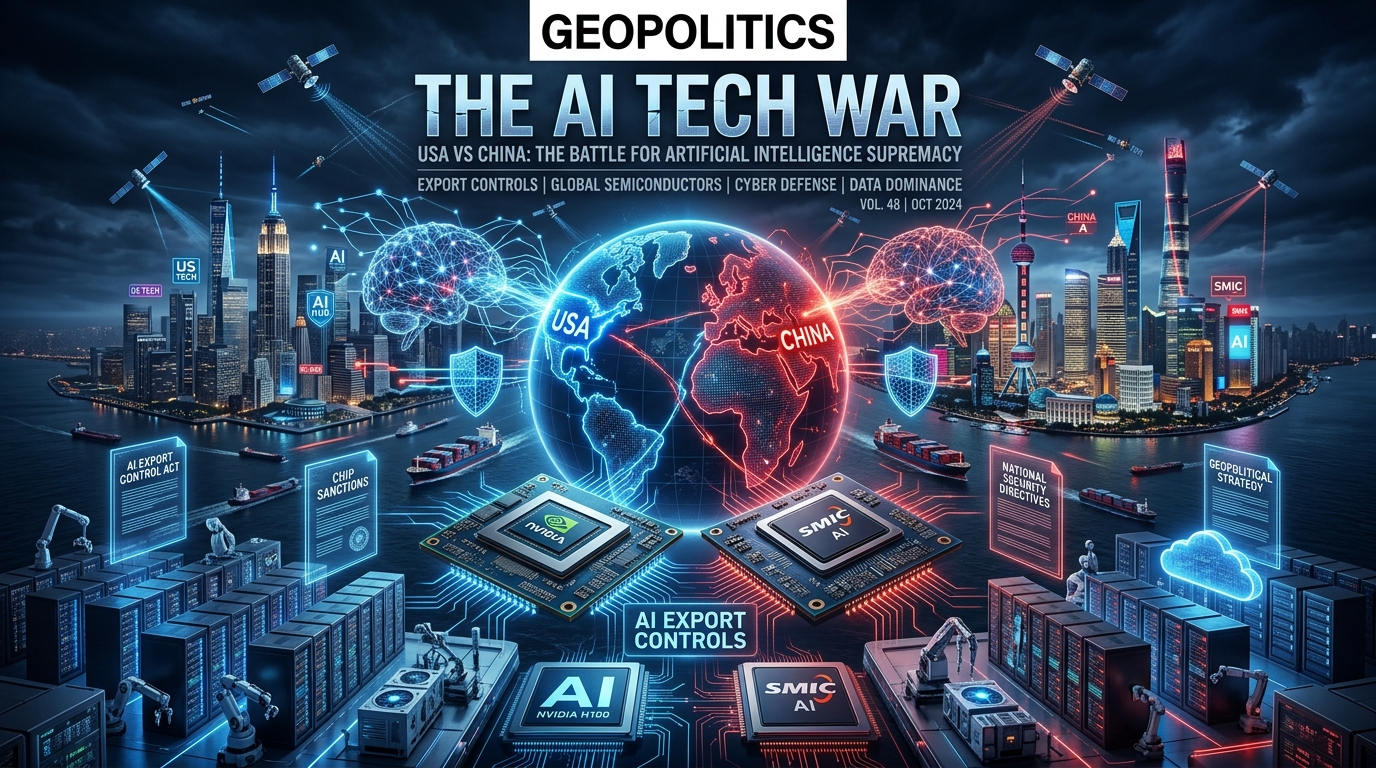
Artificial Intelligence has rapidly evolved from a technological breakthrough into one of the most powerful geopolitical assets of the modern era. In 2026, nations are no longer viewing AI purely as a commercial innovation tool they are treating it as a strategic national resource capable of influencing economic power, military dominance, cybersecurity, industrial leadership, and global influence.
As governments recognize the enormous strategic importance of AI, export controls have emerged as one of the most influential policy tools shaping the future of technology and business. What began as limited restrictions on semiconductor sales has now grown into a much broader struggle involving chips, cloud computing, AI infrastructure, advanced research, global supply chains, and digital sovereignty.
Today, AI export controls are no longer just about trade regulation. They are becoming strategic weapons in a global competition for technological leadership.
Understanding AI Export Controls
AI export controls refer to government restrictions placed on the transfer, sale, licensing, or sharing of advanced artificial intelligence technologies and related infrastructure across borders.
These restrictions often apply to:
High-performance AI chips
Advanced GPUs
Semiconductor manufacturing tools
AI model training systems
Supercomputing infrastructure
Cloud computing services
Sensitive AI software
Quantum computing technologies
Advanced robotics systems
Dual-use technologies with military applications
Governments typically justify these measures using concerns related to:
National security
Military modernization
Cyber warfare risks
Surveillance capabilities
Economic competitiveness
Technological dependence
Strategic autonomy
However, the real-world impact extends far beyond defense. These controls are fundamentally changing how businesses operate, invest, manufacture, innovate, and compete globally.
Why AI Has Become a Strategic National Priority
Artificial Intelligence now sits at the center of nearly every major industry and national infrastructure system.
AI influences:
Defense systems
Financial markets
Logistics networks
Healthcare diagnostics
Industrial automation
Autonomous vehicles
Cybersecurity systems
Scientific research
Smart cities
Energy management
Consumer technology
Government intelligence systems
Because AI affects so many critical sectors, governments increasingly believe that technological leadership in AI will determine future global influence.
This has created a new geopolitical reality:
countries that control advanced AI capabilities may gain long-term economic and military advantages over rivals.
In many ways, AI is becoming:
the oil of the digital economy,
the electricity of the intelligent age,
and the strategic infrastructure of the future.
The U.S.-China AI Power Struggle
The most significant force driving AI export controls today is the growing rivalry between the United States and China.
Both countries recognize that dominance in AI could shape:
economic leadership,
military superiority,
cybersecurity strength,
and geopolitical influence for decades.
As a result, the technology relationship between the two nations has shifted from cooperation to strategic competition.
America’s AI Export Strategy
The United States has introduced multiple restrictions targeting China’s access to advanced AI technologies.
These measures include limits on:
NVIDIA AI chips
Advanced GPUs
Semiconductor manufacturing equipment
Supercomputing systems
AI research collaboration
High-end cloud computing access
The U.S. government argues that advanced AI technologies could strengthen China’s:
military systems,
surveillance networks,
cyber capabilities,
and strategic intelligence operations.
Washington’s strategy focuses on slowing China’s ability to develop cutting-edge AI systems by restricting access to critical infrastructure.
China’s Response: Accelerating Self-Reliance
China has responded aggressively by increasing investments in:
domestic semiconductor manufacturing,
AI research,
local chip companies,
advanced manufacturing ecosystems,
and independent supply chains.
Chinese policymakers now prioritize technological self-sufficiency at a national level.
Major Chinese technology firms are rapidly expanding efforts to reduce dependence on Western technologies.
This includes:
developing domestic GPU alternatives,
building local AI cloud infrastructure,
supporting state-backed semiconductor programs,
and expanding AI talent development.
China’s response shows that export controls may slow competitors temporarily, but they can also accelerate domestic innovation and long-term self-reliance.
Semiconductors: The Core Battlefield
At the center of the AI export-control war lies one critical component:
advanced semiconductors.
Modern AI systems require enormous computational power to train and deploy models. Without high-performance chips, advanced AI development becomes extremely difficult.
AI chips power:
Large language models
Generative AI systems
Autonomous vehicles
Robotics
Data centers
Scientific simulations
Military AI applications
This is why semiconductor companies have become strategically important global players.
Firms such as:
NVIDIA
AMD
Intel
TSMC
ASML
Samsung
are now deeply connected to geopolitical decision-making.
Governments increasingly recognize that whoever controls semiconductor infrastructure controls the foundation of the AI economy.
Why Semiconductor Manufacturing Is So Important
Semiconductor production is one of the most complex manufacturing processes in the world.
Advanced chips require:
rare materials,
sophisticated equipment,
highly specialized talent,
precision engineering,
and enormous capital investment.
Only a handful of companies globally possess the capability to manufacture the most advanced chips.
This concentration creates geopolitical vulnerability.
For example:
Taiwan plays a massive role in global semiconductor manufacturing.
ASML in the Netherlands dominates advanced lithography equipment.
U.S. firms control critical chip design technologies.
Because the supply chain is globally interconnected, export controls can create ripple effects across entire industries.
The Rise of Technological Nationalism
AI export restrictions are contributing to a broader global trend:
technological nationalism.
Countries increasingly want domestic control over:
critical technologies,
cloud infrastructure,
semiconductor production,
AI systems,
and strategic digital infrastructure.
Governments no longer want excessive dependence on foreign suppliers for technologies essential to economic stability and national security.
This shift is driving massive public investment programs around the world.
Global Governments Are Investing Billions
Countries are pouring unprecedented amounts of money into domestic AI and semiconductor ecosystems.
Examples include:
The U.S. CHIPS Act
Europe’s semiconductor initiatives
India’s semiconductor mission
China’s state-backed AI infrastructure investments
Japan’s advanced manufacturing programs
The goal is clear:
build resilient national technology ecosystems capable of surviving geopolitical disruption.
Businesses Are Facing a Completely New Risk Environment
AI export controls are creating major operational challenges for businesses globally.
For decades, companies optimized around globalization and efficiency.
Today, businesses must optimize for:
resilience,
diversification,
regulatory compliance,
and geopolitical stability.
This represents a major transformation in corporate strategy.
Supply Chains Are Being Redesigned
Many multinational corporations are restructuring supply chains to reduce dependence on politically sensitive regions.
Companies are increasingly moving operations toward:
India
Vietnam
Mexico
Malaysia
Indonesia
This trend is often described as:
China+1 strategy,
regional diversification,
or geopolitical supply-chain restructuring.
Businesses now understand that overdependence on a single country creates strategic vulnerability.
Rising Compliance Complexity
AI export restrictions are creating a new era of regulatory complexity.
Companies must now navigate:
export licensing requirements,
AI software restrictions,
cross-border data rules,
cloud infrastructure regulations,
sanctions compliance,
cybersecurity obligations,
and government reporting requirements.
Compliance departments are becoming more important than ever.
Large organizations are investing heavily in:
legal teams,
cybersecurity experts,
policy advisors,
risk-management systems,
and geopolitical intelligence.
Cloud Computing Is Also Becoming Geopolitical
The AI battle is not limited to physical chips.
Cloud computing infrastructure has become another major strategic battleground.
Advanced AI models require enormous computing resources often provided through cloud providers.
Governments are now concerned that unrestricted cloud access may allow foreign entities to bypass hardware export restrictions.
As a result, policymakers are increasingly examining:
cloud service regulations,
international data access,
AI training environments,
and cross-border infrastructure usage.
Cloud infrastructure is becoming strategically important in the same way as semiconductors.
The Fragmentation of the Global AI Ecosystem
One of the most important long-term consequences of AI export controls is the possible fragmentation of the global technology ecosystem.
Instead of one interconnected digital economy, the world may split into multiple regional AI systems.
Different countries may develop:
separate AI standards,
independent cloud ecosystems,
local chip supply chains,
region-specific regulations,
and isolated digital infrastructures.
This could create:
higher costs,
reduced interoperability,
slower innovation,
and increased operational complexity for global businesses.
Digital Sovereignty Is Reshaping Global Policy
Many governments now prioritize “digital sovereignty.”
This concept refers to a country’s ability to maintain control over:
its data,
digital infrastructure,
AI systems,
and technology ecosystem.
Governments fear excessive dependence on foreign technology providers because it may create:
economic vulnerability,
political pressure,
cybersecurity risks,
or infrastructure instability.
As a result, countries increasingly support:
domestic cloud providers,
local data centers,
national AI initiatives,
and sovereign digital infrastructure.
India’s Opportunity in the New AI Economy
India is emerging as one of the biggest potential beneficiaries of global AI supply-chain diversification.
Why?
Because global companies are actively searching for alternatives to China in:
manufacturing,
AI services,
cloud operations,
software engineering,
and digital infrastructure.
India possesses several advantages:
a massive engineering workforce,
strong IT expertise,
expanding startup ecosystems,
digital public infrastructure,
and a growing technology market.
If India continues investing in:
semiconductor infrastructure,
AI talent,
logistics,
power systems,
and policy consistency,
it could become a major global hub for AI operations and technology manufacturing.
AI Export Controls Are Changing Investment Strategy
Investors are increasingly evaluating companies based on geopolitical resilience.
Key considerations now include:
supply-chain diversification,
regulatory exposure,
export-control vulnerability,
semiconductor access,
and political risk.
This changes how businesses are valued.
Companies with resilient infrastructure and diversified operations may receive:
stronger investor confidence,
better valuations,
and more stable long-term growth expectations.
Innovation Could Slow Down
One major concern surrounding AI export restrictions is the potential slowdown in global innovation.
Historically, technological progress benefited from:
international collaboration,
open research,
global talent movement,
and shared scientific ecosystems.
Export restrictions may reduce:
collaborative research,
cross-border innovation,
and global knowledge sharing.
This fragmentation could slow the pace of technological advancement globally.
Smaller Countries May Face Challenges
Developing countries may struggle in this new environment.
Advanced AI infrastructure requires:
massive investment,
semiconductor access,
high-end cloud systems,
skilled talent,
and regulatory sophistication.
Countries lacking these resources risk falling behind in the global AI economy.
This could widen technological inequality between nations.
Cybersecurity Risks Are Increasing
AI export controls are also intensifying cybersecurity competition.
Countries and organizations may increasingly attempt to:
bypass restrictions,
access restricted technologies,
conduct cyber espionage,
or acquire intellectual property illegally.
As AI becomes more valuable strategically, cyber threats surrounding advanced technologies are likely to increase significantly.
The Future of Global Business Strategy
Business leaders can no longer separate:
technology strategy,
geopolitical strategy,
and regulatory strategy.
These areas are becoming deeply interconnected.
Future corporate success may depend not only on innovation, but also on:
geopolitical awareness,
regulatory adaptability,
supply-chain resilience,
and strategic flexibility.
Key Strategic Lessons for Businesses
1. Geopolitics Must Be Monitored Constantly
Political developments now directly impact:
operations,
profitability,
manufacturing,
and market access.
2. Efficiency Alone Is No Longer Enough
The lowest-cost supply chain may not be the safest or most sustainable.
Businesses are now prioritizing resilience over extreme efficiency.
3. AI Governance Is Becoming Essential
Organizations need:
ethical AI policies,
compliance systems,
cybersecurity readiness,
and export-control awareness.
4. Diversification Is Critical
Companies overly dependent on single markets or suppliers face growing risk exposure.
Regional diversification is becoming a strategic necessity.
The Next Decade of AI Competition
The future AI race will not be determined only by who builds the smartest models.
Success may increasingly depend on who controls:
semiconductor infrastructure,
cloud ecosystems,
data networks,
regulatory standards,
supply chains,
and strategic alliances.
AI export controls are transforming technology into an instrument of geopolitical power.
This shift is reshaping:
global trade,
corporate strategy,
international alliances,
investment patterns,
and the future structure of the digital economy.
Final Thoughts
AI export controls represent one of the most important transformations in global business and technology policy.
Governments are no longer treating technology as purely commercial infrastructure. Instead, AI is being viewed as a strategic national asset tied directly to:
economic power,
military capability,
and geopolitical influence.
For businesses, this creates both enormous risks and massive opportunities.
The companies that thrive in this new era will not simply be the most innovative.
They will be the ones that successfully balance:
technological advancement,
regulatory compliance,
geopolitical awareness,
operational resilience,
and long-term strategic adaptability.
The age of purely globalized technology is evolving into an era of strategic AI competition and businesses everywhere must prepare for the consequences.
