


SaaS Is Being Crushed by AI-Native Products
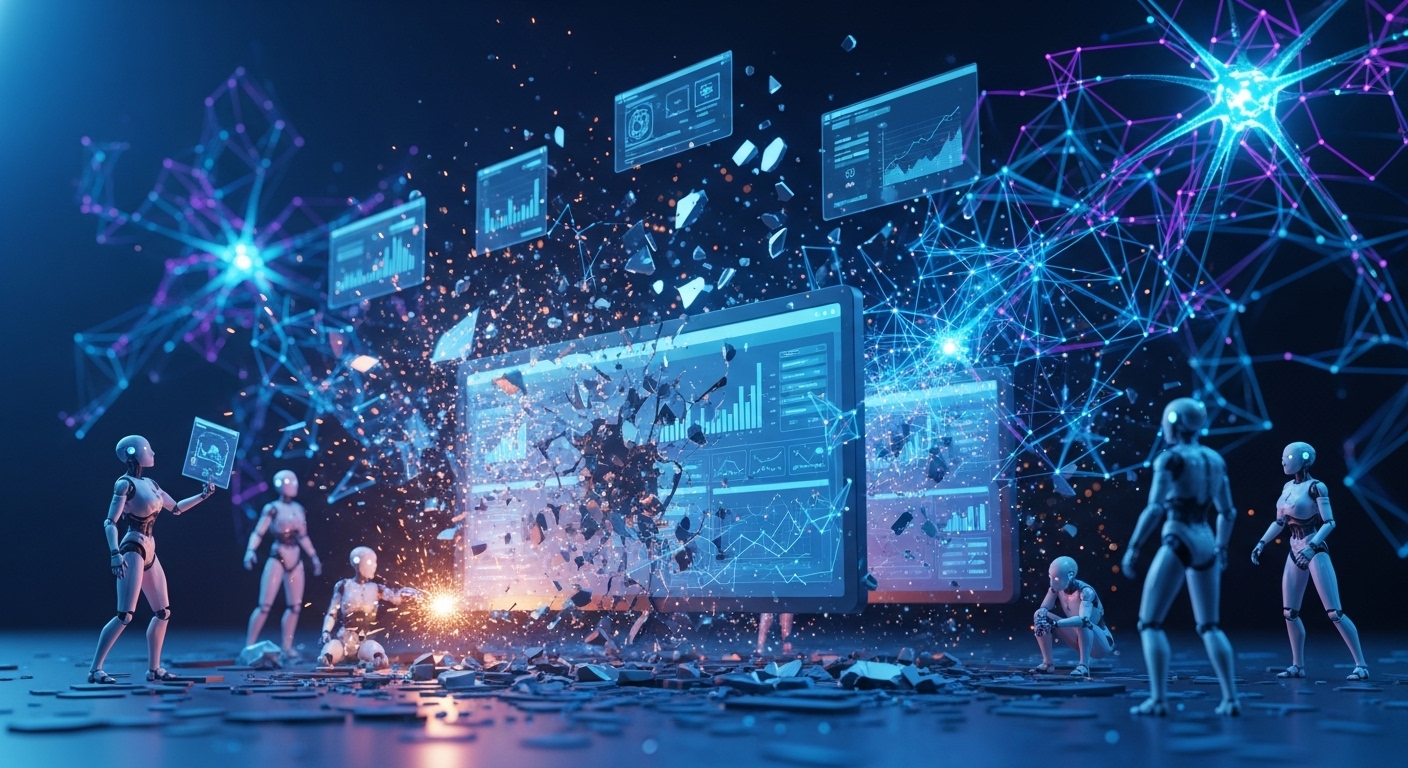
For over a decade, SaaS (Software as a Service) dominated the digital economy. Companies built billion-dollar businesses by solving narrow problems—CRM, email marketing, design, analytics each packaged into separate tools with recurring subscriptions.
That model is now under direct attack.
AI-native products are not just improving SaaS. They are replacing it.
The Core Problem with Traditional SaaS
SaaS was built for a pre-AI world. Its structure has three major flaws:
1. Tool Fragmentation
Businesses rely on multiple tools for a single workflow:
CRM for managing leads
Email software for outreach
Analytics tools for tracking
Automation tools for workflows
This creates operational drag, higher costs, and constant integration headaches.
2. Manual Input Dependency
SaaS tools require users to:
Input data
Interpret dashboards
Execute decisions manually
The software assists but it doesn’t act.
3. Static Interfaces
Dashboards and forms dominate SaaS UX. They are rigid, slow, and require training.
Enter AI-Native Products
AI-native systems are built differently. They don’t just support workflows they execute them.
Instead of giving you tools, they give you outcomes.
What Makes AI-Native Different?
1. Outcome-Driven Architecture
You don’t “use” the software. You tell it what you want.
Example:
SaaS: “Here’s your CRM dashboard. Manage your pipeline.”
AI-native: “Close more deals.” → AI handles outreach, follow-ups, and optimization
2. Natural Language Interfaces
Instead of clicking through menus, users interact conversationally similar to systems from OpenAI or Google.
This removes friction and reduces learning curves to near zero.
3. Automation at the Core
AI-native platforms:
Generate content
Analyze data
Make decisions
Execute actions
All without constant human input.
Why SaaS Is Losing Ground
1. Tool Consolidation Is Inevitable
AI collapses multiple tools into one system.
What used to require:
5 tools
3 integrations
2 team members
Now requires:
1 AI platform
1 operator
This is not efficiency. This is elimination.
2. Cost Structures Are Breaking
Businesses are tired of:
Paying for 10+ subscriptions
Managing unused features
Scaling costs linearly with team size
AI-native systems scale output without scaling headcount.
3. Speed Is the New Competitive Edge
Traditional SaaS slows execution:
Data entry
Analysis
Decision-making
AI-native tools collapse this into a single step.
Faster execution = faster growth = market dominance.
4. UX Expectations Have Changed
Users no longer tolerate complex dashboards.
They expect:
Instant results
Minimal input
Intelligent systems
If your product requires training, it’s already outdated.
Real-World Shift Patterns
This isn’t theory. It’s already happening.
CRM → AI Sales Agents
Manual pipeline management is being replaced by AI that:
Finds leads
Sends outreach
Follows up automatically
Marketing Tools → AI Growth Engines
Instead of:
Writing content
Running ads
Analyzing performance
AI systems now:
Generate campaigns
Launch them
Optimize in real time
Design Software → Prompt-Based Creation
Design is shifting from tools to intent:
“Create a landing page”
“Generate ad creatives”
And it’s done.
The Harsh Reality Most Founders Ignore
Let’s be direct.
If you’re building SaaS without AI:
You’re building something that will be replaced.
If your product requires heavy user interaction:
It will lose to something that doesn’t.
If your value is “organizing information”:
AI will outperform you and faster.
What Still Wins in This New Era
Not everything dies. But the bar is higher.
1. Vertical AI Solutions
Industry-specific AI tools (legal, healthcare, finance) still have strong defensibility.
2. Data Moats
If your product owns unique, high-quality data, you can survive and dominate.
3. Execution Speed
Companies that iterate fast on AI integration will outpace legacy SaaS players.
The New Business Model
We’re moving from:
Software as a Tool → Software as a Workforce
This means:
Fewer users
Higher output per user
AI doing the heavy lifting
Final Take
SaaS is not “evolving.” It’s being dismantled and rebuilt.
AI-native products are:
Faster
Cheaper
Simpler
More powerful
And they don’t compete with SaaS they make it irrelevant.
If you’re still thinking in terms of dashboards, subscriptions, and features, you’re already behind.
The future belongs to systems that don’t just help you work.
They work for you.
